

A business with lead activity across multiple channels but weak CRM structure, inconsistent follow-up, and limited visibility into customer status across the operating environment.
Case Study
CRM & Data Visibility Transformation
A case-study format for improving lifecycle logic, record quality, reporting clarity, and customer-data usability.
Customer records were fragmented, lifecycle logic was unclear, and reporting did not provide a dependable picture of where opportunities and operational bottlenecks actually sat.
- CRM
- Website
- Automation workflows
- Reporting dashboards
- Customer-data structure
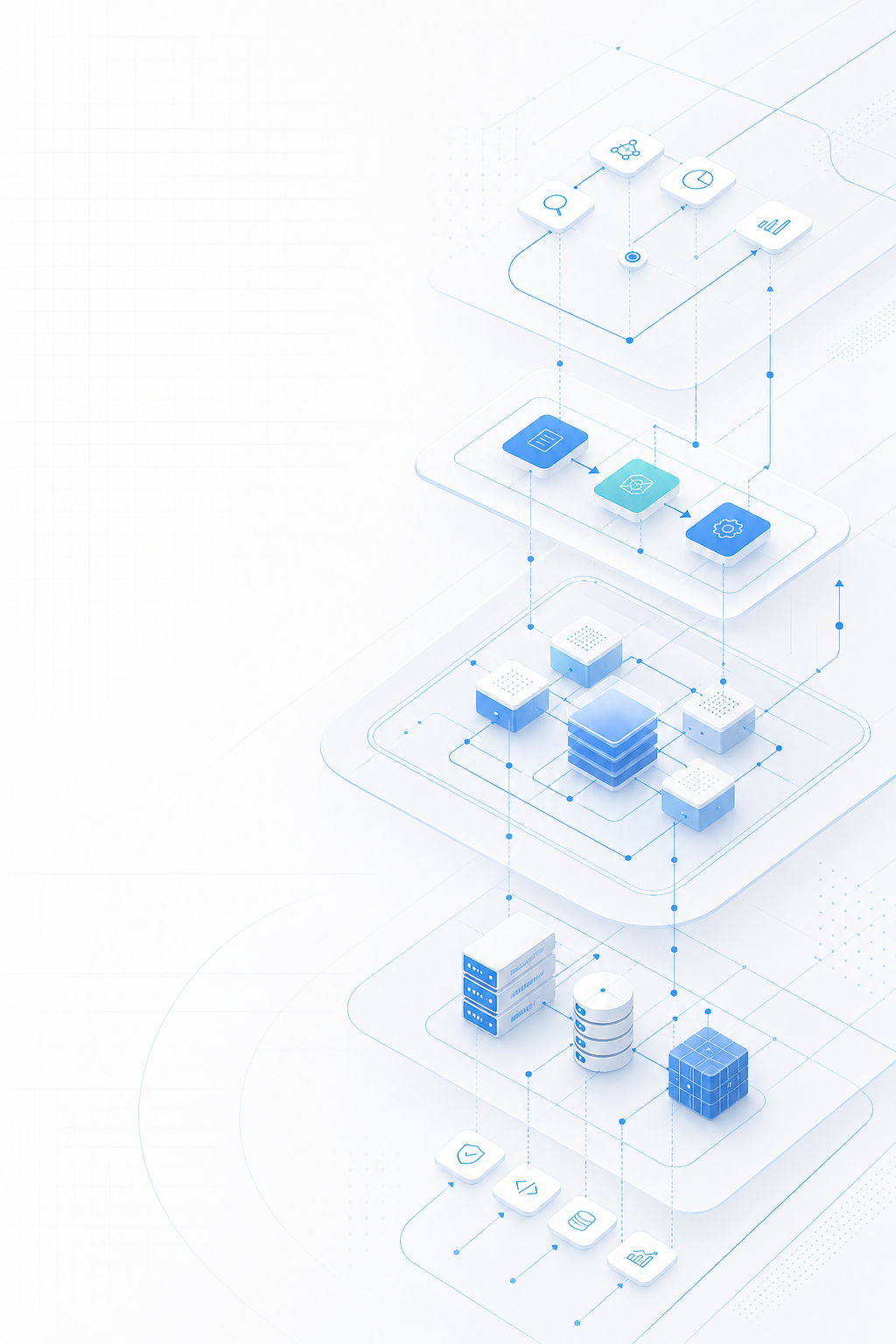
Case visualization
CRM visibility layer built around lifecycle structure and reporting clarity.
The visualization connects lead capture, record quality, lifecycle stages, follow-up ownership, and dashboard visibility into one customer-data model.
01 Capture
02 Qualify
03 Stage
04 Follow up
05 Report
Approach
- Review lifecycle stages, customer-data quality, and ownership gaps
- Redesign CRM architecture to better match the real operating model
- Connect customer-data flows to reporting and workflow design
- Document the governance needed to keep the system useful over time
Operational improvements
- Better visibility into lead status and follow-up quality
- Less manual CRM administration
- Stronger reporting alignment across teams
- A more dependable customer-data operating model
Stronger customer-data structure improves both operational consistency and the quality of commercial decision-making across sales, service, and reporting.
Where the system can expand next.
The next phase would typically extend lifecycle automation, support visibility, and leadership reporting around customer operations.
Discuss a similar operational challenge.
If your business is dealing with similar system complexity, Conmars LLC can structure a practical roadmap without relying on generic agency recommendations.